
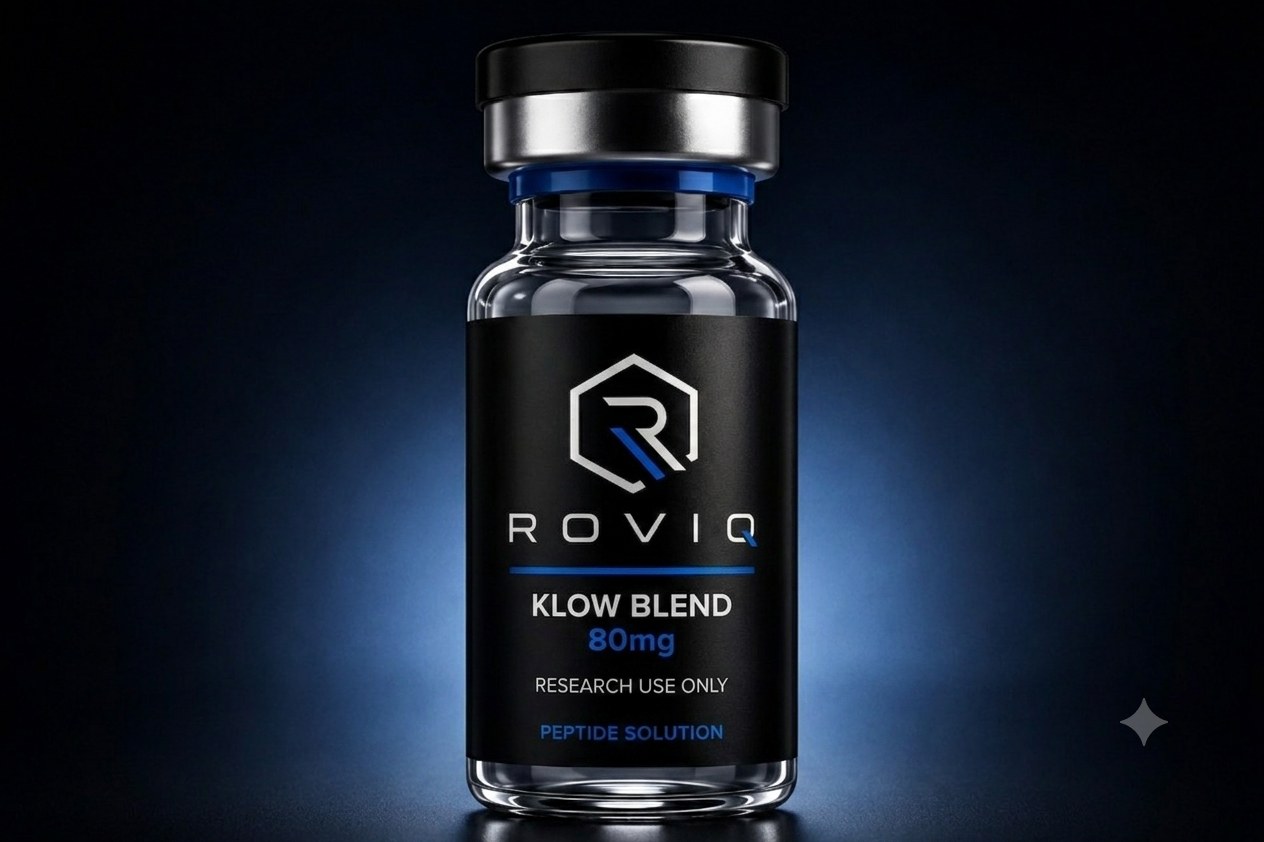
KLOW Blend (BPC-157 + TB-500 + KPV + GHK-Cu)
KLOW is a comprehensive multi-peptide research blend combining BPC-157, TB-500, KPV, and GHK-Cu in a single lyophilized preparation. The blend brings together compounds studied for tissue repair, anti-inflammatory, and skin remodeling research. BPC-157 and TB-500 are studied for regenerative properties in laboratory models, KPV for immune modulation, and GHK-Cu for cellular signaling and collagen synthesis pathways.
Available Options
Research Context
KLOW combines four peptides drawn from adjacent areas of preclinical research: BPC-157, a stable pentadecapeptide derived from a human gastric juice protein; TB-500, a synthetic fragment of the actin-binding region of thymosin beta-4; KPV, the C-terminal tripeptide (Lys-Pro-Val) of alpha-melanocyte-stimulating hormone; and GHK-Cu, a copper-binding tripeptide found in human plasma. The blend format allows researchers to study these compounds together, though the combination itself has not been characterized as a single entity in the published literature.
Each component carries a distinct evidence profile. BPC-157 has been studied primarily in rodent models of tendon, muscle, and gastrointestinal injury, with research examining angiogenic and nitric oxide-related mechanisms; human clinical data for BPC-157 have not been published. TB-500's parent peptide, thymosin beta-4, has been examined in vitro for actin sequestration and cell migration and in animal wound-healing models, with limited early-phase human studies of the parent peptide in wound and ophthalmic contexts. KPV has been investigated in vitro in epithelial and immune cell systems, where studies describe anti-inflammatory signaling partly independent of classical melanocortin receptors, and in mouse models of intestinal inflammation. GHK-Cu has been characterized in fibroblast culture and gene-expression studies reporting influence on collagen synthesis and extracellular matrix pathways, with additional animal and small human topical studies of cosmetic formulations.
Open questions for this blend are substantial. No published work has tested the four-peptide combination directly, so interactions among components in shared model systems are unknown. The anti-inflammatory literature on KPV and the repair-oriented literature on BPC-157 and TB-500 overlap conceptually but have rarely been integrated experimentally, and formulation stability of combined preparations remains unstudied. Background on the two tissue-repair components is summarized in our BPC-157 and TB-500 research overview; findings from single-compound studies should be extrapolated to blends only with appropriate caution.
Specifications
| Form | Lyophilized powder |
| Purity | >=99% (HPLC) |
| Storage | Store lyophilized at -20C; refrigerate (2-8C) after reconstitution |
Storage & Handling
Store the lyophilized powder at -20C, protected from light and moisture. After reconstitution, refrigerate at 2-8C and use the solution promptly.
For handling guidance, see our peptide reconstitution and storage guide, and use the reconstitution calculator to plan solution volumes for laboratory work.
Certificate of Analysis
🛡 COA — BPC-157 10mg / TB-500 10mg / KPV 10mg / GHK-Cu 50mgFurther Reading
Related Compounds
References
- Matek D et al. Tendon, Ligament, and Muscle Injury, Osteotendinous, Myotendinous, and Muscle-to-Bone Junction Therapy Perspectives with Growth Factors and Stable Gastric Pentadecapeptide BPC 157-A Review. Pharmaceuticals (Basel). 2026. PMID 41754849
- Faa G et al. Thymosin β4 and β10 Expression in Human Organs during Development: A Review. Cells. 2024. PMID 38994967
- Pickart L et al. GHK Peptide as a Natural Modulator of Multiple Cellular Pathways in Skin Regeneration. BioMed Research International. 2015. PMID 26236730
- Böhm M et al. Are melanocortin peptides future therapeutics for cutaneous wound healing? Experimental Dermatology. 2019. PMID 30661264